Am I a Highly Sensitive Person (HSP)?
Understanding sensitivity, emotional depth, and the Highly Sensitive Person trait.
What is a Highly Sensitive Person?
A Highly Sensitive Person (HSP) is someone with a more finely tuned nervous system that processes sensory, emotional, and environmental information more deeply than average.
This trait was first identified and researched by Dr. Elaine Aron, who coined the term Highly Sensitive Person (HSP). Her work has shown that approximately 15–20% of the population shares this innate temperament.
You can learn more about her research and take the official self-test here:
The Highly Sensitive Person (HSP) / Dr. Elaine Aron resources
Being highly sensitive is not a disorder or diagnosis—it is a normal variation in temperament and nervous system processing.
The DOES traits of HSPs
Dr. Aron describes four core characteristics of Highly Sensitive People using the DOES framework:
D – Depth of Processing
You think deeply about experiences, meaning, and emotional nuance.O – Overstimulation
You can become overwhelmed by busy, loud, or emotionally intense environments.E – Emotional Responsiveness & Empathy
You feel emotions deeply and often absorb or attune to others’ emotional states.S – Sensitivity to Subtle Stimuli
You notice subtle shifts in tone, energy, environment, or relational dynamics.
These traits reflect a highly responsive nervous system—not something wrong with you, but something that needs understanding and support.
You might be a Highly Sensitive Person if you…
Feel easily overwhelmed by stimulation or busy environments
Need significant alone time to recover after social interaction
Feel emotions deeply and intensely
Are highly empathetic or sensitive to others’ moods
Overthink or replay conversations after they happen
Are deeply affected by criticism or conflict
Notice subtle changes others miss
Feel drained in emotionally charged environments
Many HSPs spend years thinking something is “wrong” with them before discovering this trait—and finally feeling understood.
Sensitivity Is Not a Flaw
When unsupported, high sensitivity can feel like:
overwhelm
anxiety
burnout
emotional exhaustion
difficulty with boundaries
But when supported, sensitivity becomes:
deep emotional intelligence
strong intuition
empathy and attunement
creativity and insight
meaningful relational depth
The key is not changing your sensitivity—it is learning how to support your nervous system so it can function with more ease and stability.
When Sensitivity Becomes Overwhelming
You may benefit from support if you notice:
chronic emotional overwhelm or shutdown
difficulty managing stress or stimulation
feeling “too sensitive” in relationships or environments
anxiety, exhaustion, or emotional depletion
patterns of over-responsibility or emotional absorption
Therapy can help you understand your sensitivity and build tools for emotional regulation and nervous system support.
Support for Highly Sensitive People
Therapy for HSPs focuses on helping you understand your nervous system and develop greater emotional stability, clarity, and self-trust.
In therapeutic work, you may explore:
Nervous system regulation and grounding
Emotional overwhelm patterns
Boundaries and relational sensitivity
Processing past emotional experiences
Building internal safety and resilience
Understanding sensitivity as a strength
Approaches that can be especially supportive include trauma-informed therapy, somatic work, EMDR, Brainspotting, and parts work (IFS-informed therapy).

HSP therapy in Maui, Hawaii
As an HSP therapist in Maui, Hawaii, I support Highly Sensitive People in understanding their emotional world, regulating overwhelm, and developing a more grounded relationship with themselves.
My work integrates trauma-informed, somatic, and EMDR-based approaches to support nervous system regulation and emotional integration.
If you are curious about working together, you can learn more about therapy options on my main therapy page.
If This Resonates With You
Many Highly Sensitive People describe a sense of finally “finding a language” for their experience when they discover this trait.
If you are wondering whether this might describe you, you are not alone—and there is nothing about your sensitivity that is wrong.
Understanding your nervous system is often the first step toward greater ease, clarity, and self-trust.
Want Support as a Highly Sensitive Person?
If you are a Highly Sensitive Person seeking deeper emotional understanding and support, you are welcome to explore therapy options.
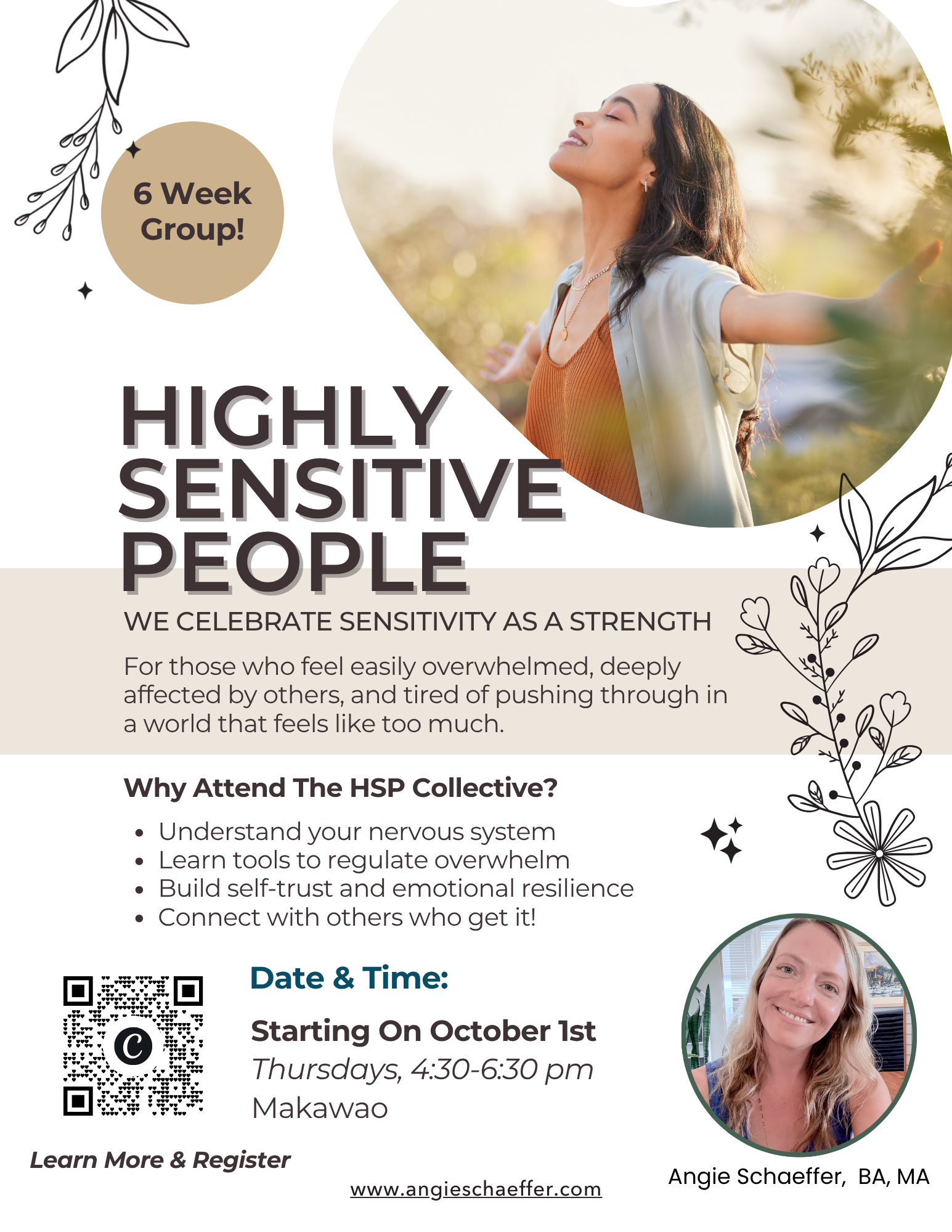
The HSP Collective is coming back! Are you a Highly Sensitive Person who's ready to stop just surviving your sensitivity and start leading from it?
Join me for a six-week closed coaching group designed specifically for HSPs — a space to understand your nervous system, heal old patterns, and step into your sensitivity as the gift it truly is.